
Information about lithium-ion batteries
Handle with care: Handle with care, as lithium batteries can be damaged if dropped, bent, or crushed. In the event of an accident, the battery may experience an internal short circuit, which could lead to battery failure or, in the worst case, an explosion. Do not use the battery in freezing temperatures!
Lifespan:Several years if treated well.
Lithium-ion batteries, or Li-ion batteries, are a widely used and efficient type of battery. E-go electric scooters use large Li-ion batteries weighing several kilograms. Li-ion batteries are also used in electric tools and other devices, such as vacuum cleaners, lawn mowers, and chainsaws equipped with electric motors. 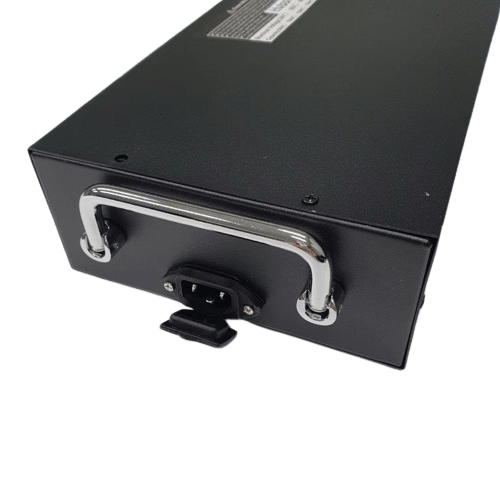
Li-ion batteries have no memory effect, so they can be charged and discharged as needed.
Li-ion batteries have a low self-discharge rate, but Huippukone recommends charging the battery every 1-2 months if it is stored for a long period of time.
The importance of maximum power output is most evident when accelerating rapidly or on larger hills. When driving at a steady speed of 25 km/h, a scooter consumes approximately 400-600 W of energy. When driving at lower speeds, the consumption is even lower.
Energy consumption when traveling at a steady speed of 25 km/h on a Fat Scooter is approximately 20-25 Wh per kilometer. Consumption increases slightly when traveling into a headwind, with a heavy load, or on hilly terrain.
From this, we can roughly calculate how many kilometers the battery will last:
First, you need to convert the battery's Ah into watt-hours using the formula 60v x 20ah = 1200wh. If consumption is 20Wh/km, then 1200wh / 20Wh = 60km. This means that with a consumption of 20 Wh, you can drive 60 km with a 1200 Wh battery. With a heavier load, 1200 Wh / 25 Wh = 48 km. Frost also affects the battery capacity, reducing it by approximately 20% of the maximum.
There are optional Wh meters available that allow you to monitor the actual consumption of your battery. When the battery is fully charged and the Wh meter is reset before departure, the meter shows how much energy you have consumed from the battery. If your battery capacity is 1200 Wh and you have used 1050 Wh, it is time to head home or find a charger . If you use a Wh meter, it is a good idea to run your battery down completely once to find out how much energy it currently contains. The capacity of the battery gradually decreases with use.
Li-ion batteries have a high energy density, which means that a large amount of energy can be stored in a small space. If a 60V 20Ah Li-ion battery is compared to a lead-acid battery with the same power, five lead-acid batteries need to be connected in series to achieve a nominal voltage of 60V. One 12V 20Ah lead-acid battery weighs roughly the same as a 60V 20Ah Li-ion battery. (approx. 7-8kg) Li-ion batteries offer significant weight and space savings.
The service life of Li-ion batteries is shortened by repeatedly running the battery down completely. Continuously driving at the maximum limit of the battery also shortens its service life. (This can be mitigated by using dual batteries, which share the high load between them.) Before long-term storage, it is advisable to charge the battery fully or at least to 80% capacity, as Li-ion batteries undergo slight self-discharge. It is therefore advisable to charge the battery every 1-2 months during storage.
Do not store the battery in freezing temperatures as this will shorten its service life!
Electric scooter battery life
How many kilometers can an electric scooter battery last? Can I drive 20-30 kilometers on a single battery charge, or is it enough for 40-60 kilometers? This is important information for electric scooter users, and manufacturers do their best to estimate the range on a fully charged battery.
In practice, however, the range depends on many factors, which makes it extremely difficult to give an accurate and reliable mileage figure. The size of the battery naturally has a significant impact on power storage (12Ah or 20Ah). Battery usage and age are also important factors, as are the rider's weight, riding position, riding style, and speed. Last but not least, the route (uphill or flat), road surface (road or terrain), wind resistance, and even tire pressure affect battery life. Cold air significantly affects the operating range!
How to charge your battery safely
When using batteries, charging is the most risky stage. Most of the risks are associated with charging the battery and the few hours after charging.
- Only use the charger intended for this product for charging.
- Disconnect the device from the charger when charging is complete.
- Do not use a charger that is damaged, malfunctions, or has damaged cords or connectors.
- The room where the device or battery is charged must be equipped with a fire alarm and fire extinguishing equipment. Ensure that the alarm can be heard throughout the building!
- Do not charge the device or battery when no one is at home.
- There must be no fire load near the rechargeable battery or device, especially above it. Do not charge the battery on a shelf or under furniture. The charging surface must be non-flammable.
- If the battery or device overheats, unplug the charger's power cord if you can do so safely.
- Batteries should not be charged in freezing temperatures. Although the battery warms up during charging, charging in cold conditions damages the battery and shortens its service life.

More general information about electric scooters and  electric kickboards:
Batteries tested in Finland and CE approved, available from us at affordable prices.
You can order a 12Ah battery for your electric scooter here.
You can order a 20Ah battery for your electric scooter here.
You can order a 26Ah battery for your electric scooter here.